


Bitcoin art is the propaganda arm of a monetary revolution. That's the honest definition, and it's the one you won't find on Wikipedia.
I've been making Bitcoin art since 2017 and doing it full time since 2018. Before that I worked in corporate finance, with a Master's in Finance and a close look at how the money machine actually runs. I left to draw the case for better money, and today I sign and ship every print from my studio in Guadalajara. So when someone asks me what Bitcoin art is, they get the answer from inside the movement.
What Is Bitcoin Art?
Bitcoin art is visual work created about, for, or on Bitcoin. Each of those words is its own layer of the same movement:
- About Bitcoin. Art that takes Bitcoin, fiat currency, central banking, inflation and monetary freedom as its subject. The message is the reason the piece exists.
- For Bitcoin. Art made to spread the idea: posters, prints, memes and murals made to orange-pill someone who's never read the white paper and never will.
- On Bitcoin. Art inscribed directly on the Bitcoin blockchain as Ordinals, with the file itself stored in the chain.
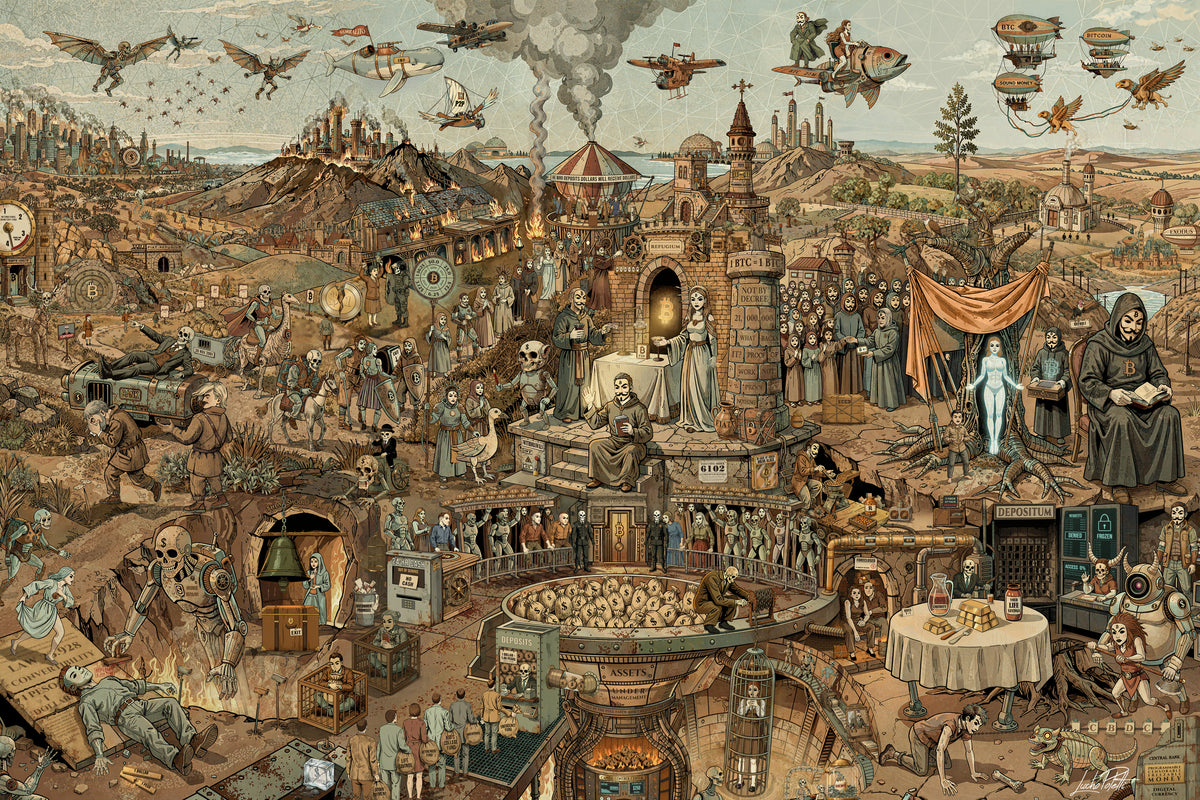
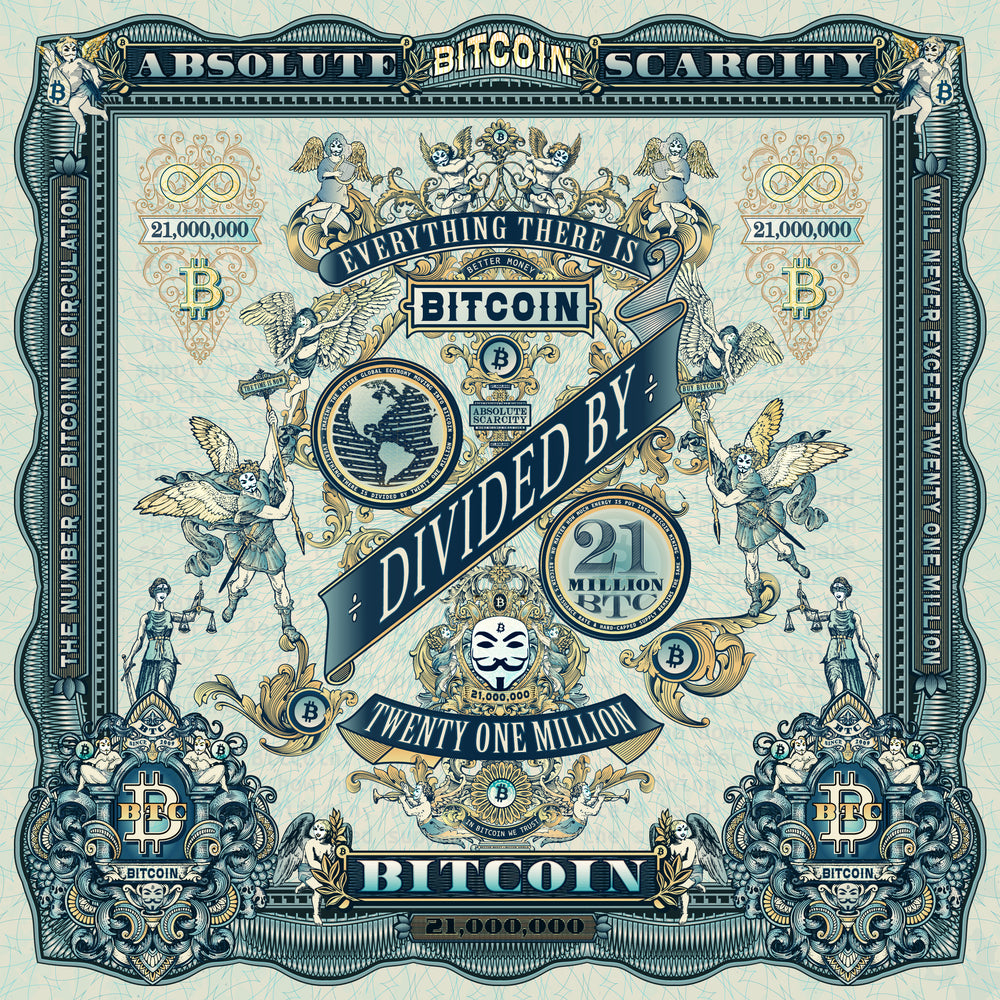
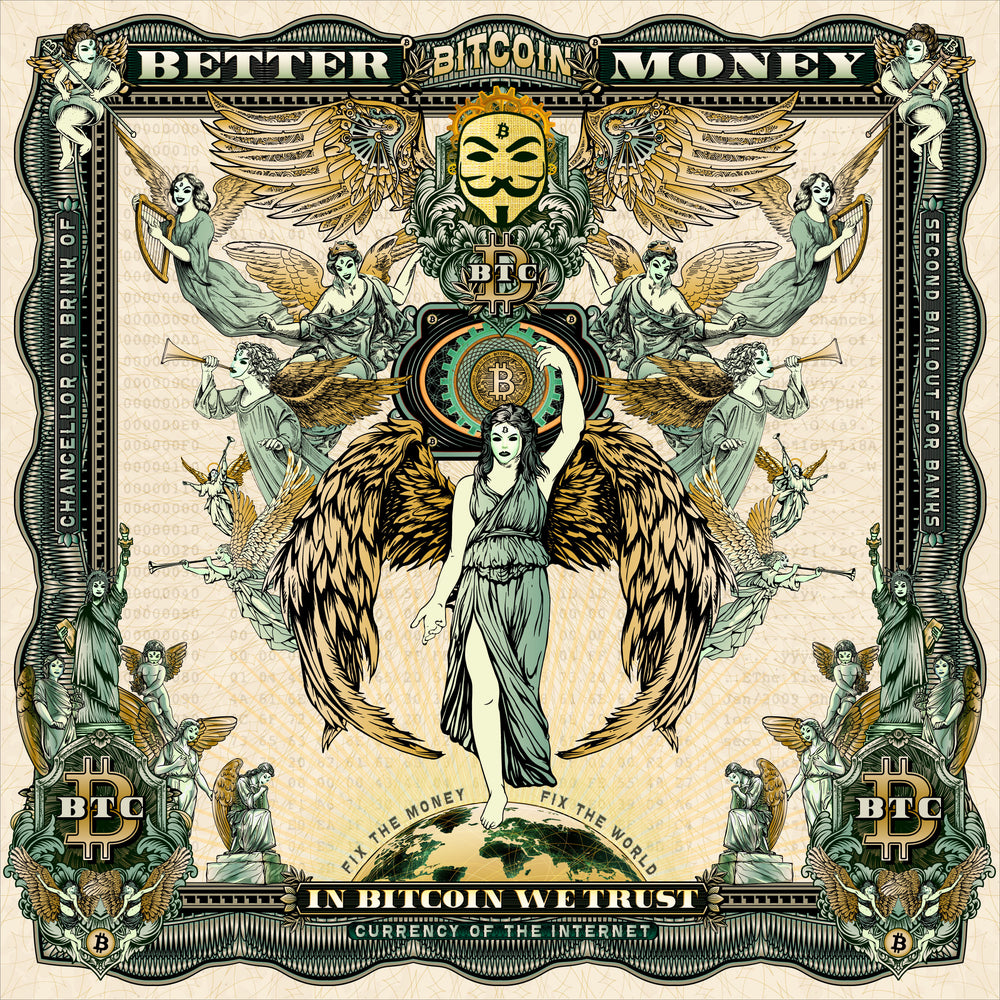
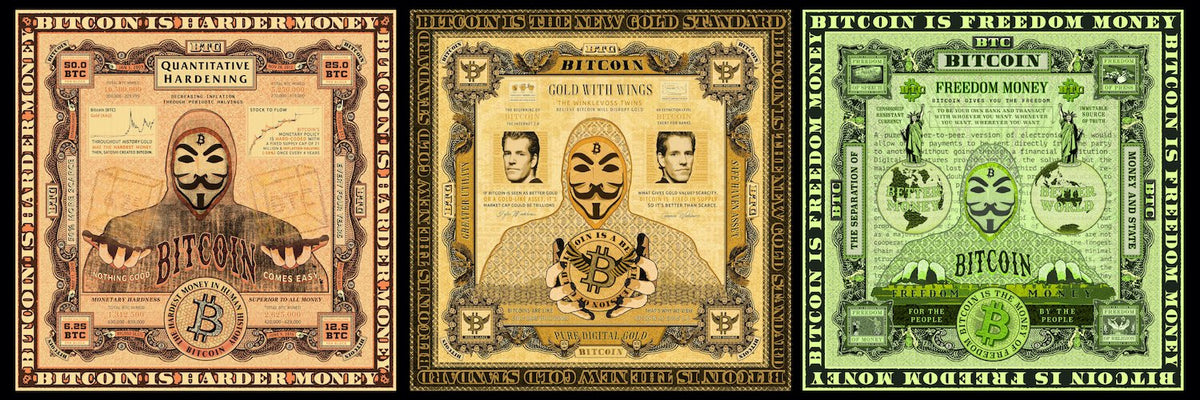
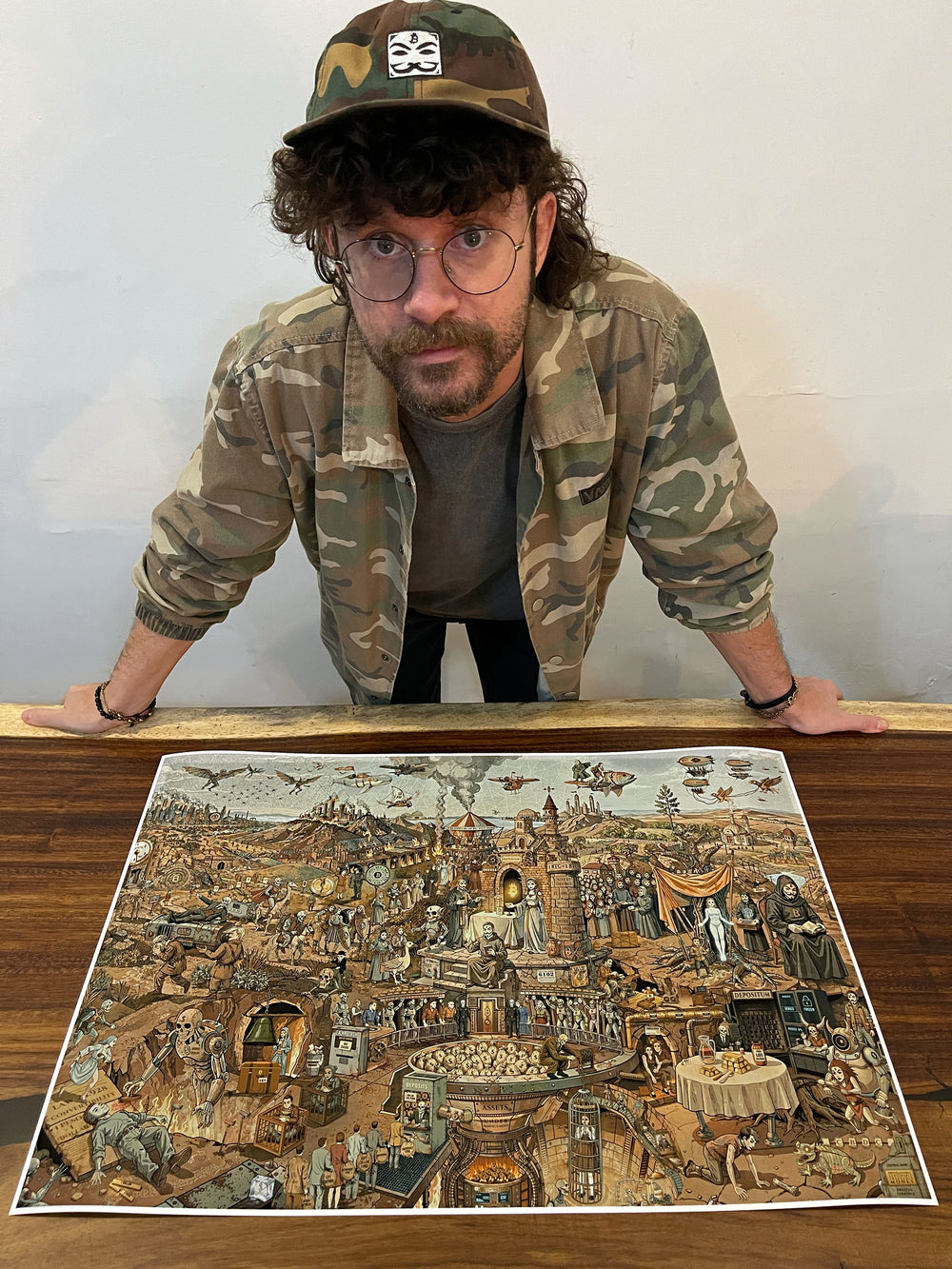
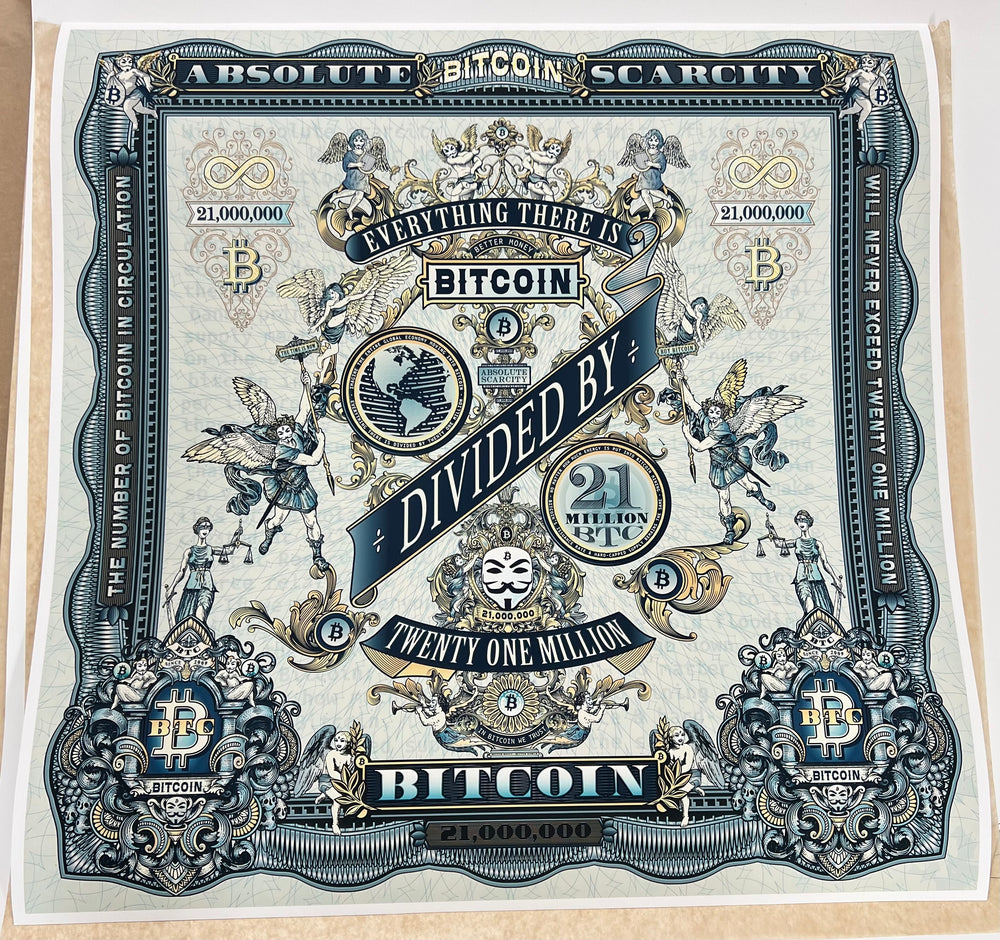
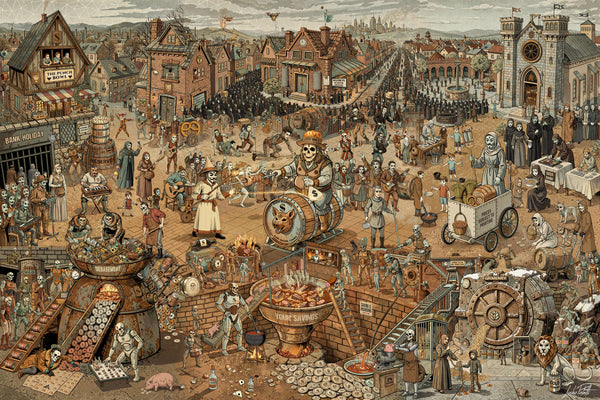
Most of my work lives in the first two. My Bitcoin Certificates take the engraved look of old bearer bonds and banknotes and point it at 21 million. Ten Decrees takes ten of the most famous paintings Bosch and Bruegel ever made and redraws them for the fiat age.
What separates Bitcoin art from crypto art in general is conviction. A lot of crypto art followed whichever chain was pumping that month. Bitcoin artists picked a side and stayed on it, and the work keeps making the same argument, piece after piece: the money we were born into is broken, and something better already exists.
Why Artists Make Art About Money
Money is the water we all swim in, and almost nobody looks at it.
A dollar bill is a designed object. Somebody chose the engraved portrait, the border, the seal, the serial number and the Latin motto, and every one of those choices tells you who's in charge. Paper money is the most widely printed artwork in history, and it's propaganda for whoever prints it.
Bitcoin artists take that same visual language and turn it around. My Bitcoin Certificates borrow the borders and official seals of old bearer bonds and put ₿ where the issuing authority used to sign. The story they tell is the other one: the 2008 bailouts, and a system where they print and we pay while our savings lose value every year.
I saw the first story from the inside. I studied finance, earned the Master's and worked in the industry, and what I found was a lot of problems dressed up in professional language. Inflation is a hidden tax, and debt is the product. Once I stopped pretending not to see the cracks, art was the loudest way I had to say so.
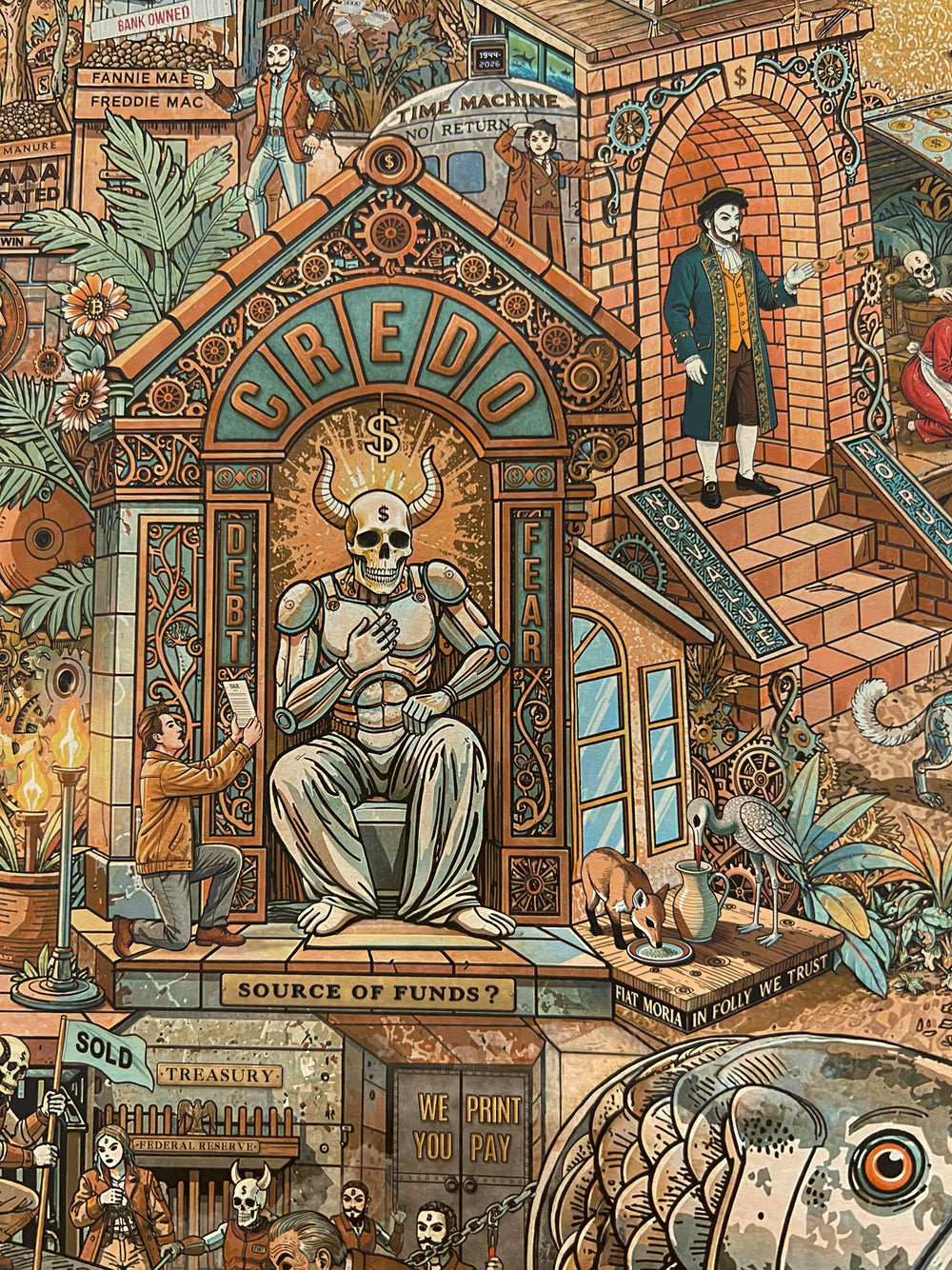
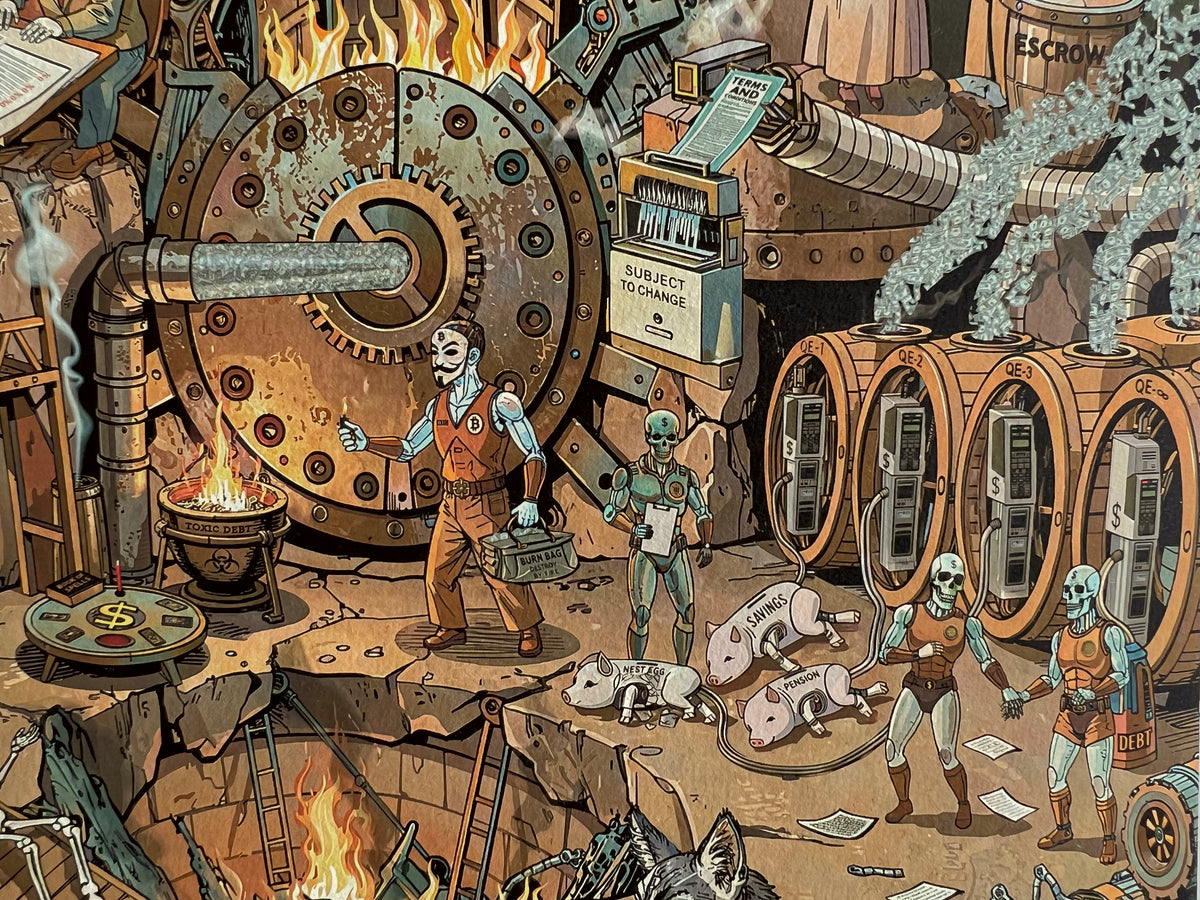
The old masters understood money's grip on people too. Bosch and Bruegel painted greed and folly about five hundred years ago, packing their panels with hundreds of small scenes that each carry a moral. Ten Decrees takes ten of those paintings and redraws them around the money of our own time. In Fiat Moria, after Bruegel's Netherlandish Proverbs, a horned $ skull sits enthroned under the word CREDO between columns marked DEBT and FEAR, and the vault doors below it read WE PRINT / YOU PAY.
The Propaganda-Art Tradition
I call my work visual propaganda, and I mean it as a technical term.
Big movements get visualized before they get realized. The Second World War ran on posters, and the revolutions before it ran on pamphlets and woodcuts. Edward Bernays and Gustave Le Bon wrote down what poster artists already knew: crowds move on images far more than on arguments, because an image skips the debate and goes straight for the gut.
Bitcoin art comes straight out of that lineage. The difference is who it works for. Historical propaganda mostly served states and armies, while this kind serves an idea nobody owns, sound money and a way out of the fiat system, and it turns the old visual weapons back on the people who built them.
That's why so much Bitcoin art borrows from banknotes and war posters: they're the most tested visual tools anyone ever made, and for once they're working for a cause that doesn't need a shot fired.
A Short History of Bitcoin Art, 2013 to Today
Nobody handed Bitcoin artists a market. We built one in public, over more than a decade.
2013 to 2015: the meme years. The earliest Bitcoin art lived on forums. It was crude, funny, ideological and free. Artists like cryptograffiti were turning real banknotes and street art into Bitcoin statements while most people still laughed at the idea, and projects on early protocols like Counterparty showed you could tie art and collectibles to Bitcoin itself years before anyone said NFT.
2016 to 2018: Rare Pepes. The Rare Pepe movement on Counterparty was absurd, and it mattered more than it gets credit for, because it proved a digital image could be provably scarce and traded. Meme culture and monetary theory fused. I posted my first Bitcoin designs to Instagram in 2017, and by early 2018 I'd left my corporate job to do this full time.
2019 to 2021: the crypto art boom. SuperRare and Nifty Gateway turned digital art into a market with real collectors. I minted my first piece on SuperRare in September 2019, back when explaining that sentence at dinner took twenty minutes, and released AudioVisual on Nifty Gateway in 2020. Then 2021 went vertical. Speculation buried a lot of the signal, and when the money left, the artists with a message kept working.
2023 to now: Ordinals, and the return to paper. In January 2023 the Ordinals protocol made it possible to inscribe art directly on Bitcoin, with the image stored in the blocks themselves. A wave of on-chain art followed, and I wrote a collector's guide to Bitcoin Ordinals for anyone who wants the details. Since then the digital art market has ground down hard, and the work that's held up is the work you can hang: signed, numbered prints by artists who kept making the argument through every cycle.
Thirteen years in, Bitcoin art has gone from forum memes to museum walls. The fiat system it criticizes has spent those same years proving the artists right.
Prints, Digital and On-Chain
Bitcoin art comes in three forms, and most collectors start with the one they can hold.
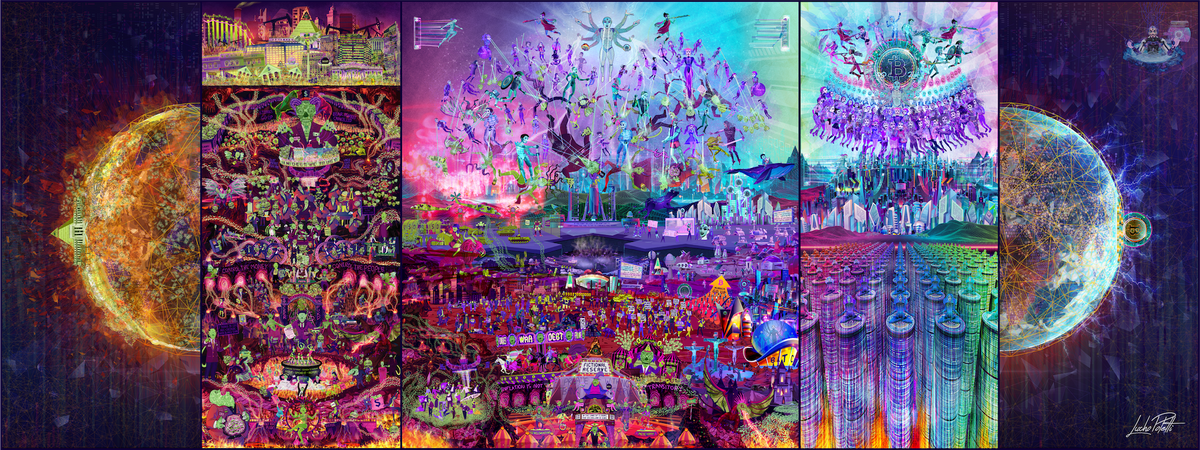
Prints. Signed, numbered prints are where Bitcoin art meets the old traditions of printmaking and the propaganda poster, and they're the center of my work. Ten Decrees redraws ten Bosch and Bruegel masterpieces for the fiat age, issued one at a time, each a 30 x 20 inch print in a signed edition of 10. The Bitcoin Certificates run in editions of 21, after Bitcoin's 21 million cap. Cypher Deos, five panels after Bosch's Last Judgment and Garden of Earthly Delights, carries the same lineage in full neon.
These pieces are dense on purpose. Fiat Fames, after Bruegel's Fight Between Carnival and Lent, fills a whole town square with hunger and handouts. In its joust, a $ skull in an EASY MONEY hat rides a PORK BARREL lettered AURI SACRA FAMES, the accursed hunger for gold.
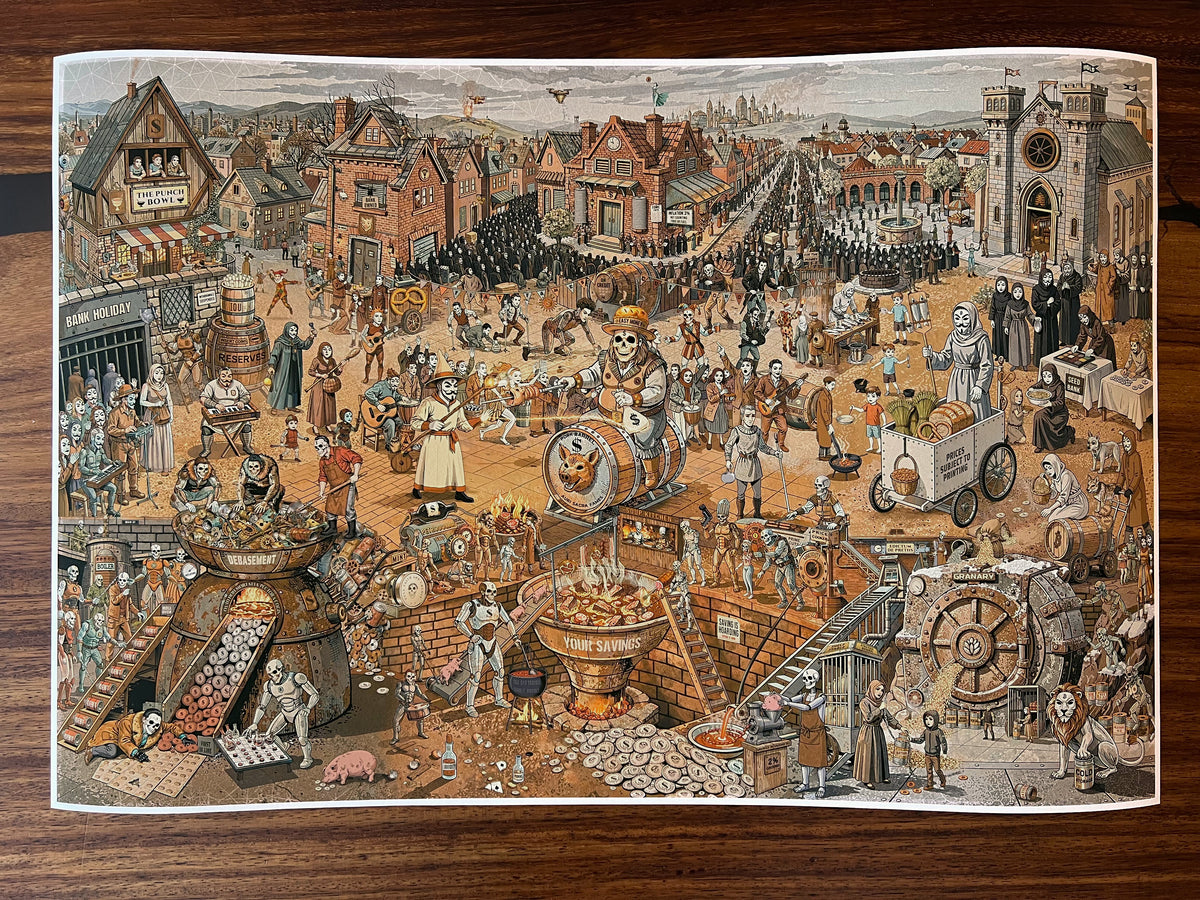
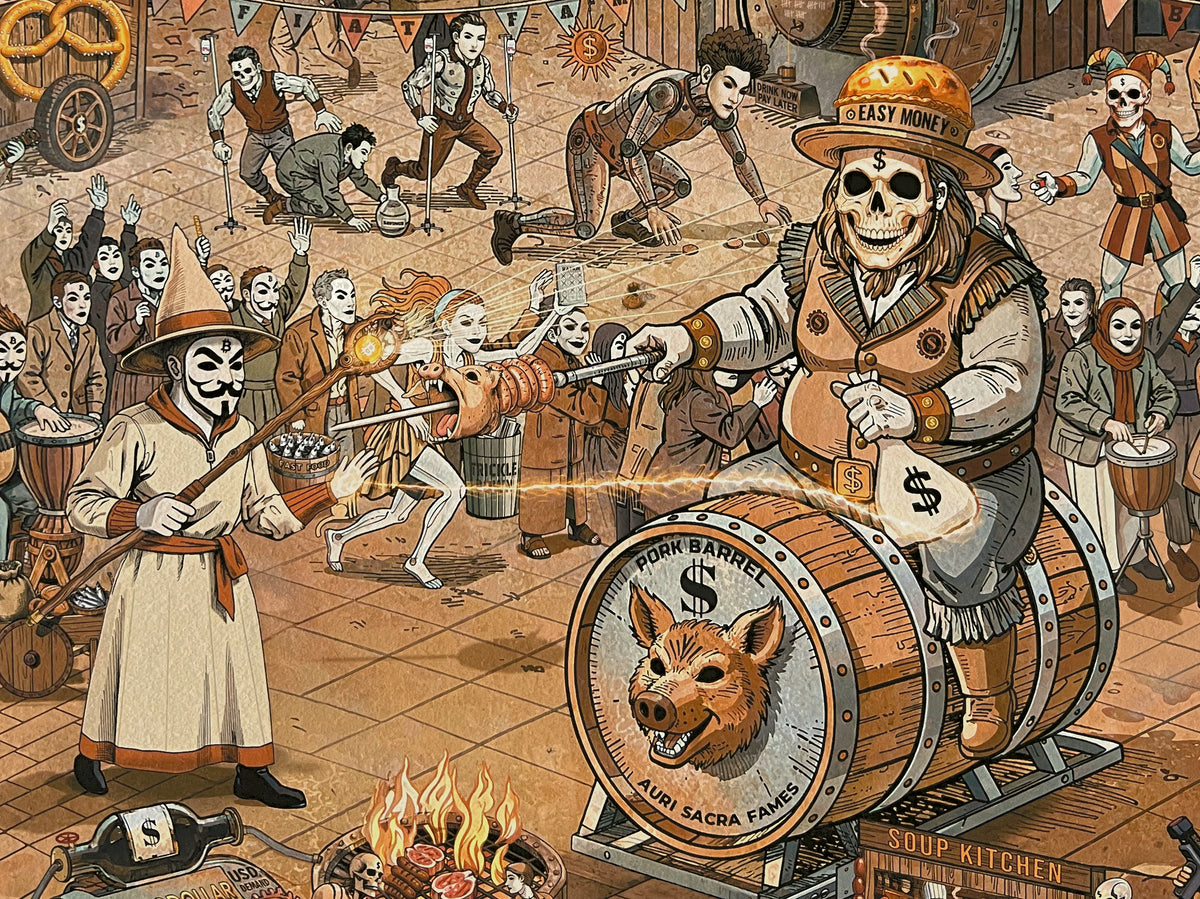
A print does something a screen can't. It turns a living room into a broadcast station for the message, and it shows the detail at the size it was drawn to be seen.
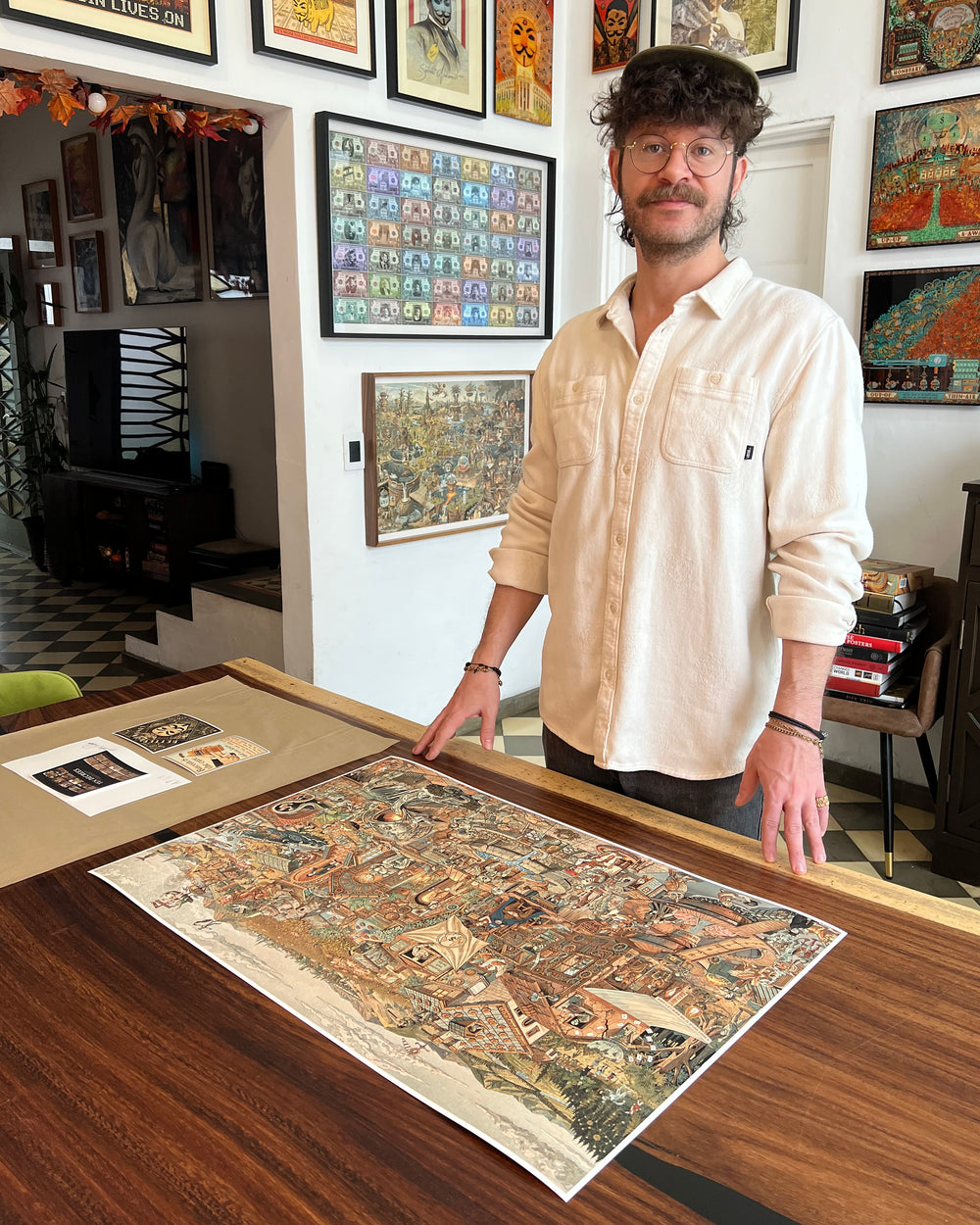
Digital and on-chain. Editioned digital pieces and 1/1s on NFT platforms are where crypto art grew up and where I found my first collectors around the world, and Ordinals put the file itself on Bitcoin. Both are real parts of this history. For most people building a collection today, though, the first piece is a print on the wall.
How to Collect Bitcoin Art
You don't need a gallery relationship or a fortune to start. You need to know what makes a print worth owning.
1. Follow the artist, not the hype
Bitcoin art is a conviction market. Find artists whose message you'd defend at a dinner table, read what they write and look at whether the work holds together as a body over the years, through bull markets and bear markets alike.
2. Know what makes a print collectible
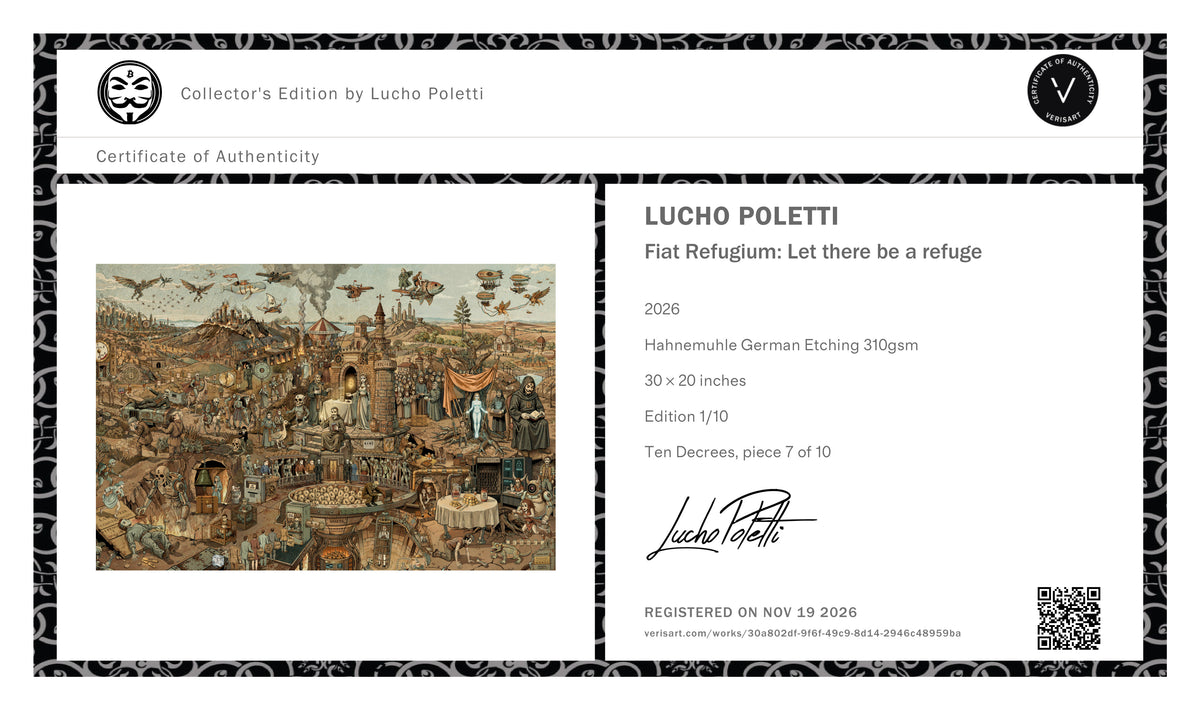
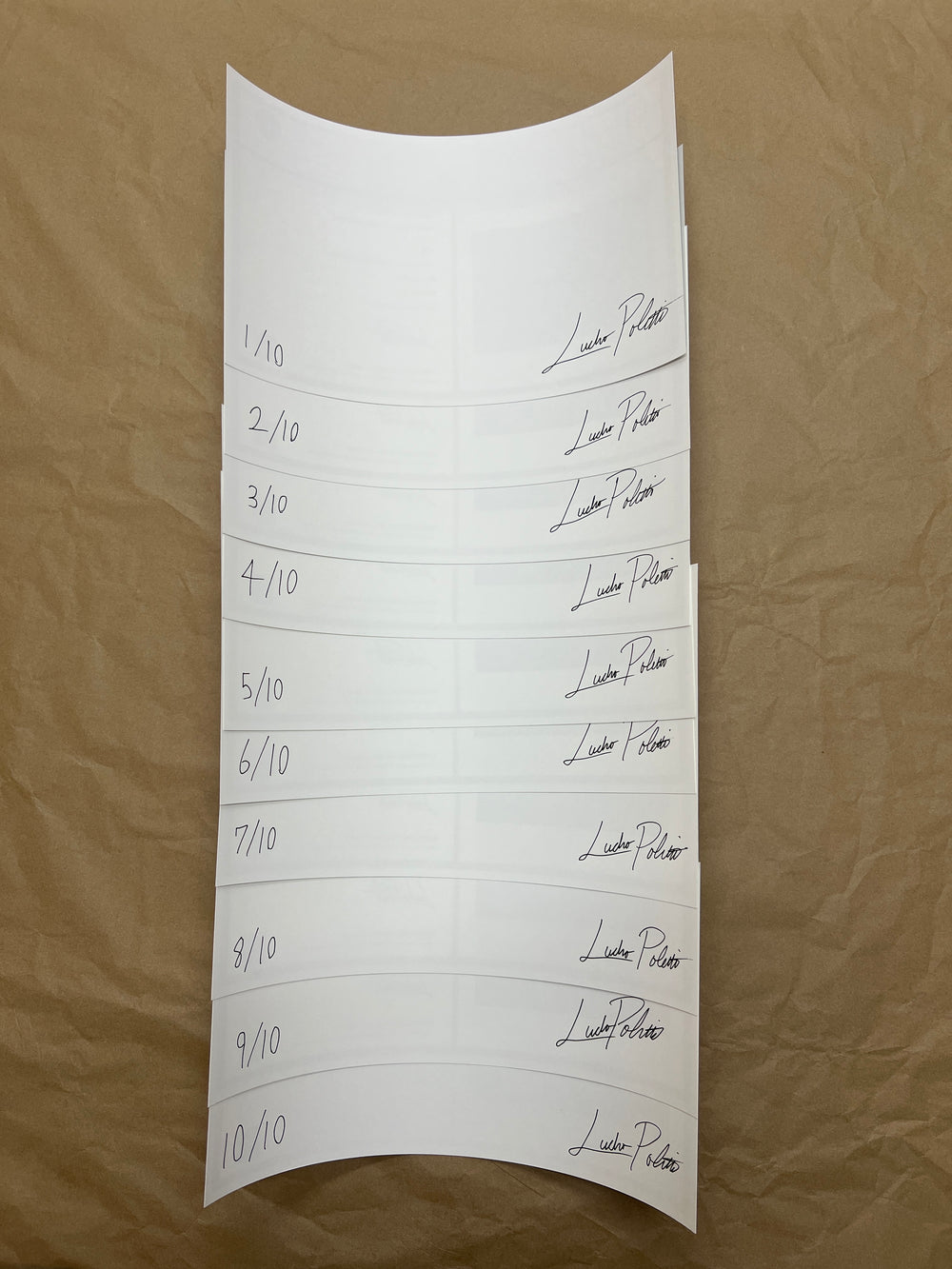
Look at how many exist, who signed them, what they're printed on and how big they are. A limited edition means a fixed number get made and no more. Every Ten Decrees print is 30 x 20 inches on Hahnemühle German Etching 310gsm, signed and numbered by hand in an edition of 10. The Bitcoin Certificates come in editions of 21 at 75 x 75 cm and editions of 10 at 90 x 90 cm, on the same paper.
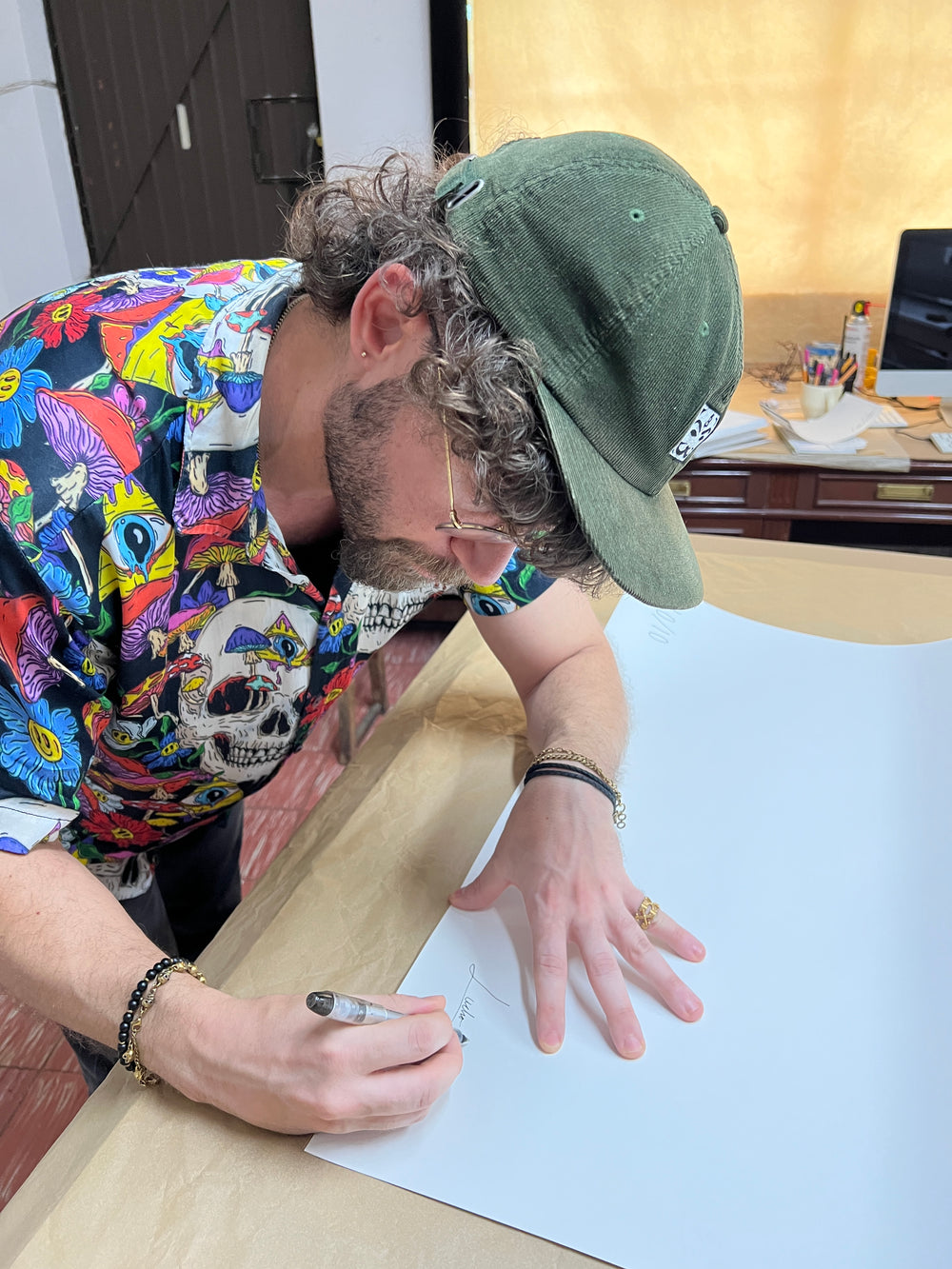
3. Ask for a certificate you can check yourself
Every print I sell comes with a certificate of authenticity registered with Verisart and timestamped on the Bitcoin blockchain, so anyone can check the edition and the date it was registered. I explain how that works in how Bitcoin art is authenticated. This movement runs on "don't trust, verify," and the art inside it should meet the same standard. If an artist is vague about authentication, walk away.
4. Buy from the artist
When you buy straight from the artist, you know exactly where the work came from, and the money goes to the person who made it. I sign every print, and I pack and ship every order myself. Ten Decrees prints travel rolled around a rigid core, bubble-wrapped, boxed and insured, with the signed certificate in the box.
5. Start with one piece you'd defend
Pick the work that says what you believe, and put it where people will ask about it. A Bitcoin print on your wall starts more conversations about money than any argument you'll ever have online.
Questions Collectors Ask
Is Bitcoin art the same as crypto art or NFT art?
No. Crypto art is the broad label for art tied to any blockchain, and a lot of it was sold as NFTs. Bitcoin art is defined by its subject and its conviction. It's about Bitcoin and better money, and it can be a print on paper as easily as a file on a chain.
Where can I buy Bitcoin art?
From the artists themselves. My signed, numbered prints are here on luchopoletti.com, starting with Ten Decrees and the Bitcoin Certificates, and they ship worldwide.
How do I know a Bitcoin art print is authentic?
Look for a hand signature, an edition number and a certificate you can check on your own. Mine are registered with Verisart and timestamped on the Bitcoin blockchain.
Bigger Than a Market
Bitcoin art is the visual record of a monetary revolution, made while it happens, by people with skin in the game. The art movements that mattered were never the comfortable ones. They looked at power and told the truth about it. Fiat has had five centuries of court painters. Bitcoin has us.
If the message hits you, own a piece of it. Start with Ten Decrees or the Bitcoin Certificates, and hang it where it'll start the conversation.

Better money, better world.

Leave a comment